Promotions could bring in new generation of shoppers for quality brands

A new study from SKIM has shown that consumers are altering their spending habits, around key economic and social trends. As the importance of price rises, but a preference for branded products – and their perceived quality – also grows, many younger shoppers are turning to promotional offers for support.
As consumers continue to contend with a long-term downturn in their spending power, they are realigning their spending habits. To that end, SKIM found that a 69% majority of global consumers see price as more important than last year – as inflation begins to creep up again, and economic uncertainty means many are concerned with employment and household debt.
This is seeing a rise in pricing sensitivity in certain consumer segments. Food saw 71% of consumers say they had perceived more pricing sensitivity during their shopping experience, and the same number agreed as much for the household care segment. While a majority of 65% said they had seen increased sensitivity in personal care prices, this was a lower level – leading the researchers to examine why.
According to consumers, the most important factors around personal care products were not related to price, but rather friend or expert recommendations, product design, and brand reputation. The researchers therefore suggest that more sensitive segments try to highlight their unique points of difference, and emulate personal care by leveraging ratings and reviews to show value beyond price. Whether this is so easily transferable is open to question, however, as personal care has also grown in importance to consumers to compensate for a lack of access to public healthcare – something that has elevated the segment beyond its traditional realm of ‘luxury spending’.
Desire for quality
In previous years, consumers have responded to downturns in spending power, by moving away from branded items to their store-label equivalents. However, consumers also seem to recognise that buying a cheaper product may come with interest in the long-term, as it may need to be replaced or repaired after a shorter window of time.
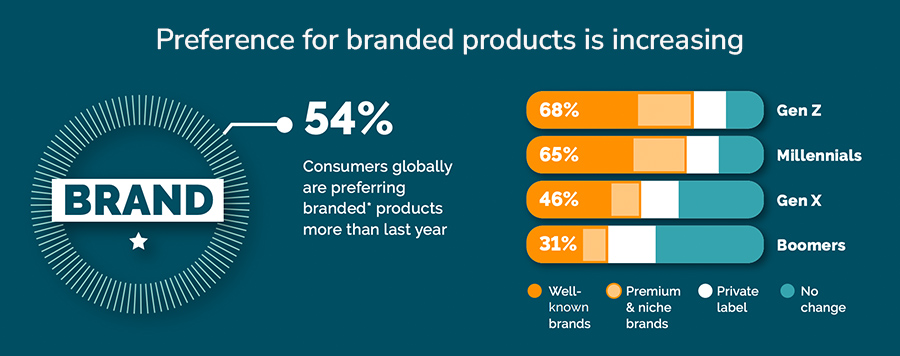
As a result, despite the inflated costs across all segments of retail, the perceived importance of branded products is on the rise. Due to the reputation of well-known brands, 54% of consumers around the world said they prefer them more now, than in 2024.
In particular, younger consumers were leading this trend. A 65% portion of Millennials and 68% of Gen Z said they saw well-known brands or premium and niche brands becoming more important. In contrast, Baby Boomers and Gen X still saw a majority unchanged, or seeing private labels as growing in importance.
As they look to secure their futures with new generations of shoppers, brands need to recognise the opportunity to build lasting connections with young consumers. According to SKIM, this can be realised by crafting “targeted messages that resonate with each generation’s unique preferences, to prevent them from switching to lower-priced alternatives”.
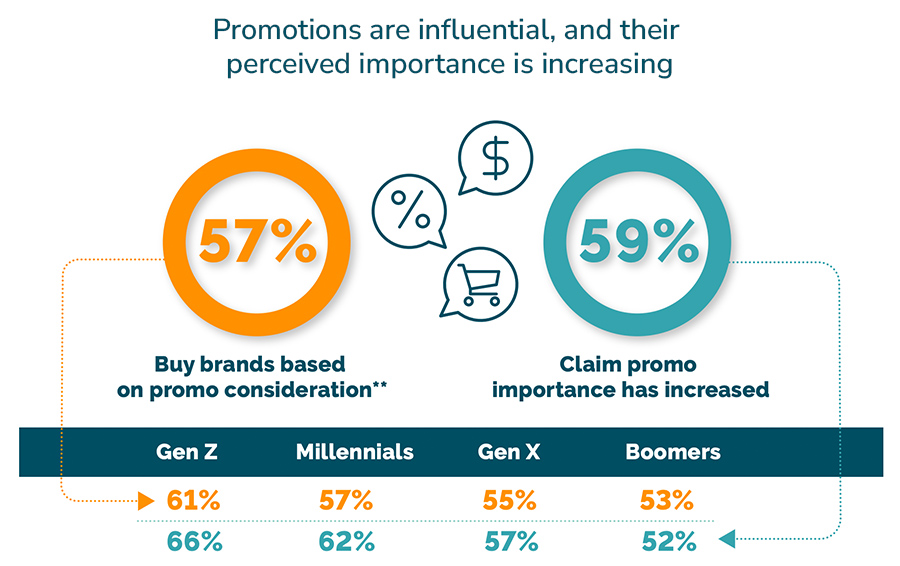
But the research also showed another, perhaps more obvious route into the hearts of younger consumers. Discounts. Promotions can be influential in purchasing decisions – and introduce new customers to quality products, which they will return for.
Illustrating the opportunity, SKIM found that while 57% of consumers on average said they purchased things based on promotional considerations, that rose to 61% in Gen Z. Meanwhile, an average of 59% said promo importance had increased overall – rising to 62% among Millennials and 66% among Gen Z. On that basis, SKIM concluded that a smart promotional strategy “that considers generational preferences and aligns with a brand identity” could be crucial to retailers revitalising their consumer base for the future.