Three-quarters of UK retailers believe employee safety is an area of ‘overinvestment’

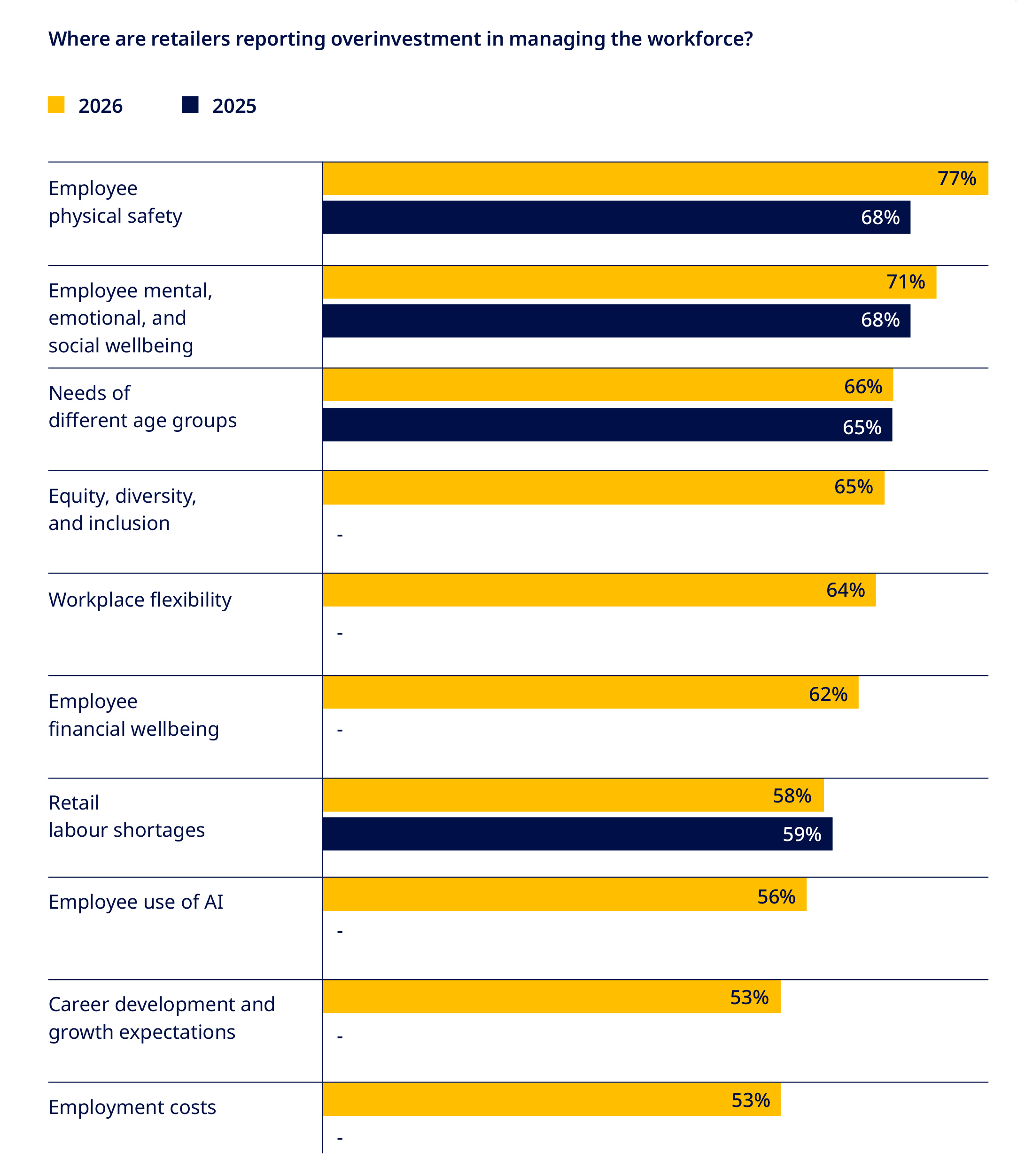
As retail leaders continue to tout flexibility and agility as key tenets of a successful business, major long-term issues – such as health and safety, and complying with labour laws – are disappearing down the corporate agenda. According to new research from Marsh, as nine-in-10 retailers contend with immediate cases of ‘significant disruption’, almost three-quarters are highlighting employee safety, and mental health and wellbeing, as areas of ‘overinvestment’.
While the public at large might not imagine the shops they frequent as being especially dangerous, the hidden risks behind the storefront are severe and wide-ranging. In fact, according to a comprehensive workplace risk assessment by health and safety consultancy iHasco earlier in 2026, retail is level with construction as the joint riskiest sector for the year. Both retail and construction attained a significant score of 85 out of a possible 90 in the company’s ‘Risk Index’.
And while 57% of the retail organisations surveyed named the enhancement of mental health support and the management of workplace stress as their foremost health and safety priorities, 31% rated issues related to manual handling, lifting injuries, and overall workplace wellbeing as the second most critical concern.
Employers were confident of their handling of these issues – rating themselves an average of 7.9 in the safety index. The thing is, though, given the chance, business leaders very rarely suggest that they are poorly prepared for anything – and there is a clear disconnect between their estimations, and the lived experience of most staff. Another study from Motorola Solutions found that 62% of employees felt retailers could do more to help keep them safe – while a quarter added things were bad enough for them to consider leaving their current role.
Workplace disconnect
Ahead of the December busy-season – the period when workers feel most at risk, as interactions with problem customers intensify – this worrying disconnect has again been flagged up by a report from professional services group Marsh. The firm’s Retail Pulse shows that an 85% portion of executives believe staff are well protected, and while that figure falls to 72% of HR leaders – whose job directly pertains to the safety and welfare of workers – most C-suite respondents seem to be earmarking employee safety as an area of ‘overinvestment’.
A similar number also hinted that employee mental, emotional, and social wellbeing might be an area they could line find efficiency savings in. A 71% portion of retail leaders said this was an area of overinvestment, up from 68% in 2025 – following a similar rise in the scepticism around physical safety spending. And while no previous data was collected on this front, a 65% majority said they felt workplace inclusion and equality were also areas of ‘overinvestment’ – suggesting work place rights may be in line for pushback, from a C-suite looking to save or adapt finances in response to other pressures.
Speaking on the findings, Rebecca Harrop, employee experience and talent strategy consultant with Marsh in the UK, commented, “Business leaders often look at quantitative metrics such as incident rates, lost time due to injuries, and whether safety procedures are followed. But if you speak to the people on the ground, they’ll say, ‘We don’t actually feel safe day-to-day.’”
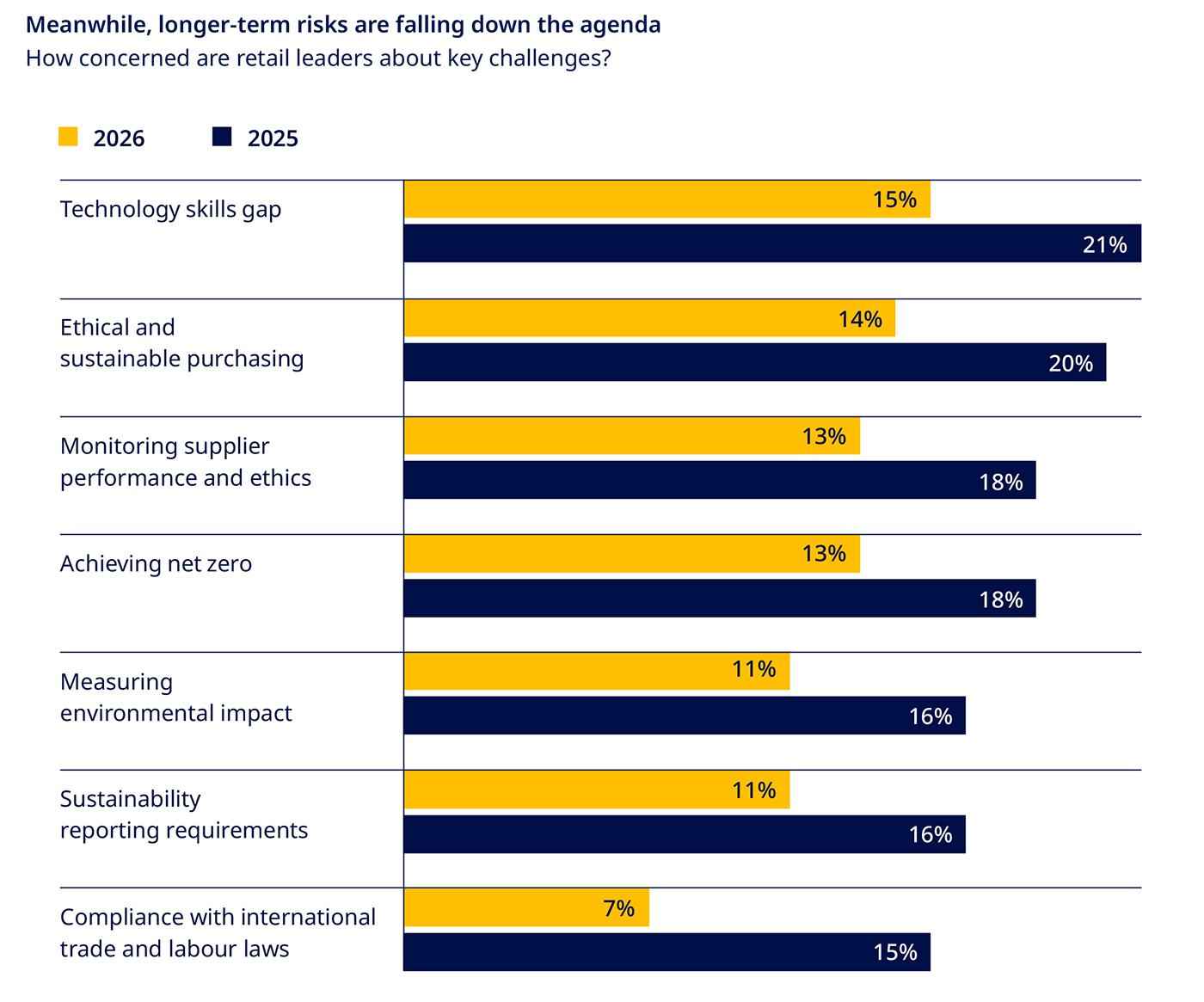
Even so, the future of employee safety as a business concern clearly hangs in the balance. Marsh asked leaders which key challenges they were most concerned about. While short-term fixes dominated the top of that list – including reskilling employees in response to changing market conditions cited by 53%, and increasing use of external advisers in response to disruption by 35% – long-term matters were now languishing at the foot of the agenda. Among those, the greatest decline just so happened to be seen when it came to complying with labour laws, and international trade. Those issues were cited by 15% of executives in 2025, but in 2026, that fell to just 7%.
Highlighting the risks of this attitude, Kelvyn Sampson, the UK retail, leisure and hospitality industries leader at Marsh Risk, added, “UK retailers have spent years becoming better at fighting fires. The danger now is that constant firefighting has become the strategy. With disruption increasingly a permanent feature of doing business, retailers need to continue looking beyond the last crisis and ask whether their investment is making them more resilient to the next one. That means being more disciplined about where money is spent, bringing frontline and risk perspectives into decisions earlier, and measuring resilience by how well the business can anticipate, adapt and recover, not simply by how much it spends.”