Why CFOs resist procurement and why scaling businesses should introduce it sooner

For many scaling businesses, procurement arrives late. But according to BridgePro Founder Phil Machin, putting off this kind of decision comes with a cost.
The business grows. Headcount increases. New technology is introduced. Teams select their own suppliers. Contracts accumulate. Renewals happen in the background. And Finance does its best to maintain visibility and control.
Eventually, someone asks the question: “Do we need procurement?”
For many CFOs, the instinctive answer is: not yet. And that hesitation is understandable. Procurement can carry some uncomfortable associations: additional headcount, more process, slower decision-making, interference with trusted suppliers and a function focused primarily on squeezing costs.
For a fast-growing organisation, none of that sounds particularly attractive. But modern procurement should look very different. Implemented properly, procurement isn’t another layer of bureaucracy. It is a commercial control framework that helps a scaling business spend money more effectively, make faster and better buying decisions, reduce contractual and supplier risk and, ultimately, improve EBITDA.
The bigger risk may therefore be waiting too long to introduce it.
There are several concerns we hear repeatedly from CFOs. “We aren’t big enough for procurement” is most common.
A business may have £5 million of external supplier spend but still feel too small to justify a traditional procurement department. That may be true – but needing procurement capability and needing a large procurement department are two completely different things.
A scaling organisation doesn’t necessarily need category managers, sourcing teams and layers of procurement administration. It does need visibility, ownership and governance over how third-party money is committed.
Perhaps the most legitimate concern, meanwhile, is “I don’t want procurement slowing the business down.” Poor procurement can absolutely introduce unnecessary process.
Requiring a lengthy sourcing exercise for every purchase, routing low-value contracts through multiple approvals or forcing every supplier decision through procurement isn’t good governance. It is bureaucracy. But good procurement does the opposite.
Clear thresholds, delegated authority, standard contracts, pre-approved suppliers and simple buying channels allow routine purchases to move quickly while ensuring that higher-value or higher-risk decisions receive the appropriate scrutiny. The KPI shouldn’t simply be procurement compliance. It should include time to buy.
Then there’s: “Our teams know their suppliers better than procurement will.” Often they do – and procurement shouldn’t replace that expertise. A CTO should remain heavily involved in selecting technology. Marketing should understand its agencies. HR should know what it needs from recruitment partners.
Procurement’s role is to add commercial challenge around those decisions. Is the price competitive? Are we buying the right volume? Is there unnecessary functionality? Are contractual terms appropriate? Is there duplication elsewhere in the organisation? What happens at renewal? What are the supplier risks?
The objective isn’t to take ownership away from the business. It is to help people make better-informed commercial decisions.
The hidden cost of waiting
The difficulty is that procurement problems rarely arrive as one large invoice. They accumulate quietly. A SaaS contract renews automatically. Another department buys a tool that duplicates something already available.
A contract is signed without the appropriate liability protection. Unused licences remain in place. A supplier increases pricing by 8% and nobody benchmarks it. An employee leaves but their software licences remain active. A three-year agreement is signed when a one-year term would have been more appropriate.
A business commits to minimum volumes it subsequently doesn’t need. Individually these decisions can look insignificant. Across hundreds of suppliers and contracts, they become material. And once a company reaches a certain scale, trying to retrofit control becomes significantly harder.
One reason procurement can struggle to gain traction with CFOs is that the function sometimes talks about the wrong measures. Number of sourcing events isn’t particularly interesting to a CFO. Neither is the number of suppliers Procurement has “engaged”. The conversation becomes much more relevant when procurement performance is connected to measurable business outcomes – eight of which are listed below.
1. EBITDA improvement
Commercial savings should ultimately translate into improved profitability. If a business removes £500,000 of unnecessary recurring supplier expenditure and that saving flows through the P&L, the impact is tangible. Procurement should therefore distinguish between theoretical negotiated savings and realised P&L benefit.
2. Spend under governance
What percentage of external spend is actually visible and appropriately governed? A scaling organisation should progressively increase the proportion of material spend covered by contracts, ownership, approval controls and renewal management.
The objective isn’t 100% procurement involvement. It is 100% appropriate governance.
3. Contract leakage
Negotiating a good deal is pointless if the organisation subsequently pays more than it agreed.
Procurement governance can identify:
- invoices exceeding contracted rates;
- unapproved price increases;
- unused licences;
- missed credits and rebates;
- minimum commitments that no longer reflect demand;
- duplicate subscriptions; and
- charges continuing beyond termination.
Reducing contract leakage is often one of the quickest ways to demonstrate value.
4. Renewal performance
Renewals are one of the largest areas of avoidable value leakage. Businesses should know what percentage of material contracts are reviewed 90, 120 or even 180 days before expiry.
Early visibility creates optionality. It provides time to benchmark, negotiate, consolidate, run a competitive process or exit. Discovering a contract seven days before an auto-renewal deadline removes most of that leverage.
5. Buying cycle time
Procurement should make buying easier, not harder. Measure the average time from request to approval, contract and purchase order. Then design processes to reduce it.
Routine, low-risk purchasing should increasingly be automated or pre-approved, allowing procurement, legal, finance and information security teams to concentrate on exceptions.
6. Contract quality and error reduction
Scaling organisations sign increasing numbers of contracts, often involving people without specialist commercial or legal expertise.
Governance should reduce:
- incorrect legal entities;
- inconsistent payment terms;
- uncapped or inappropriate liabilities;
- missed termination provisions;
- unwanted auto-renewals;
- unclear pricing mechanisms;
- incorrect order quantities; and
- contracts signed outside delegated authority.
These may not always appear on a traditional procurement savings report, but they have real financial value.
7. Supplier and operational risk
As organisations scale, they become increasingly dependent on third parties. The CFO should have visibility of critical suppliers and the financial, cybersecurity, data protection, operational and reputational risks associated with them. Procurement provides the commercial framework through which those risks can be identified and governed.
8. Productivity
There is also a less obvious return. Without an effective buying process, highly paid employees spend time finding suppliers, chasing approvals, locating contracts, negotiating renewals and resolving invoice disputes. A good procurement operating model gives that time back. That productivity improvement should be measured. Start with governance, not headcount.
Perhaps the biggest misconception is that introducing procurement means hiring a procurement team. It doesn’t. For many mid-sized businesses, the first step should be a lightweight procurement operating model. Create a central view of suppliers and contracts. Establish clear approval thresholds. Identify material and critical suppliers. Introduce renewal alerts.
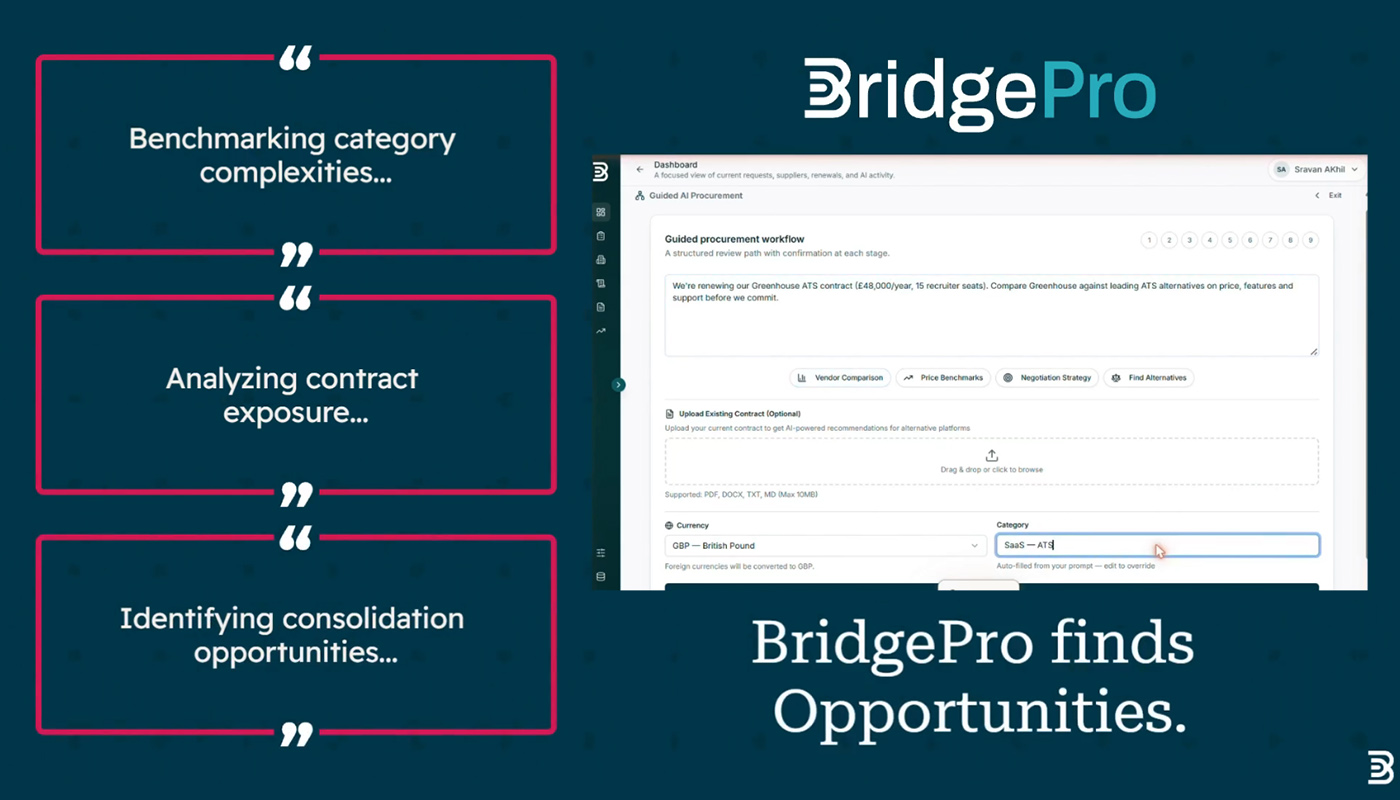
Define when Legal, Information Security, Finance and Procurement need to become involved. Benchmark material purchases and renewals. Implement simple purchase-to-pay controls. Track savings through to realised financial benefit. Much of this can now be supported by technology and AI, while specialist procurement capability can be accessed when intervention is actually required. That creates a very different economic model from building a traditional procurement department.
The question shouldn’t be: “Are we big enough to have procurement?”
A better question is: “Are we spending enough money with third parties that we should have proper commercial governance around it?”
For most scaling businesses, the answer to that question comes surprisingly early. Procurement introduced too late is often forced to clean up years of fragmented contracts, uncontrolled renewals, duplicated suppliers and inconsistent commercial terms.
Procurement introduced earlier can help prevent those problems from developing in the first place. And that is ultimately the opportunity. Modern procurement shouldn’t be the department that says no. It should create the governance that allows a scaling organisation to say yes faster, with better information, better commercial outcomes and fewer surprises.
For the CFO, that means better visibility, greater efficiency, lower risk and a measurable contribution to EBITDA. That isn’t bureaucracy. It’s good financial management.