Businesses must integrate AI impact into emissions plans

Two-thirds of businesses have not fully integrated technology into their sustainability targets, even as the environmental impact of artificial intelligence use becomes more pervasive. Researchers from BearingPoint warn that organisations need a “holistic approach that integrates sustainable technology architecture, transparent measurement of digital emissions”.
Many firms were already struggling to meet sustainability commitments before the artificial intelligence boom. And with the copious promises of the technology including being an enabler of sustainability, a number of those organisations quickly jumped aboard the bandwagon, in the hope of a cure-all that could do all the hard work for them. But four years into the hype, it has become clear that AI is itself emerging as a major source of emissions, requiring stronger governance and measurement.
Earlier in 2026, it was revealed the UK government had vastly underestimated the climate impact of artificial intelligence. An earlier estimate suggested that emissions from AI datacentres would reach a maximum of 0.142 million tonnes of CO₂ in a single year – but according to journalists from The Guardian, that was replaced with “quietly published” new data, arguing datacentres could emit up to 123 million tonnes of CO₂ – about as much as generated by 2.7 million people – over the next 10 years.
An alarming number of corporations seem oblivious to this rising danger, too. A new study from BearingPoint has polled 510 C-level executives and senior leaders in technology and sustainability, including CIOs, CTOs, CAIOs, and heads of sustainability. And while, on average, leaders said they believed their digital footprint accounted for less than 5% of total emissions, two-thirds of businesses have not fully integrated their technology and sustainability strategies, with KPIs aligned to corporate environmental targets.
Lagging impact
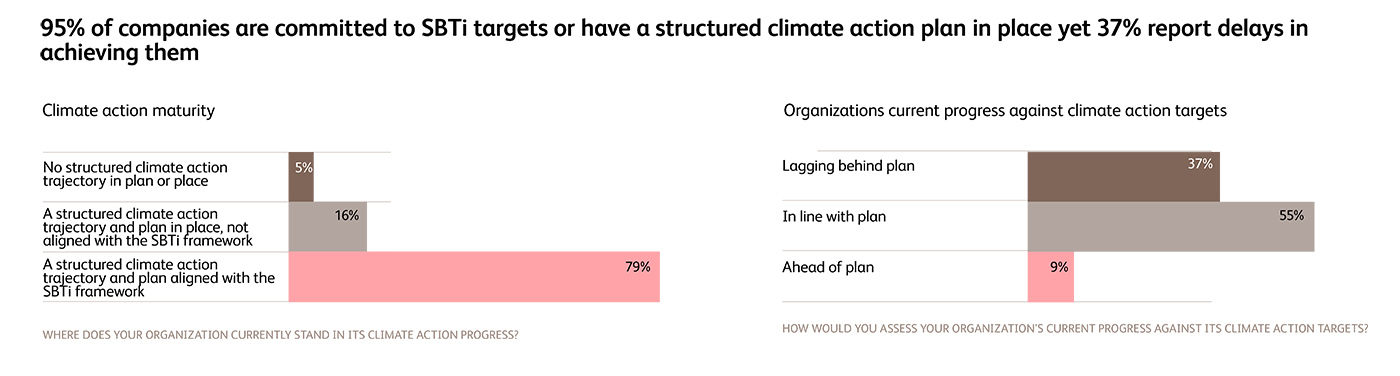
There is a distinct possibility, that even before AI adoption accelerates further, many firms are already majorly underestimating the environmental impact their rushed adoption of the technology is having. And considering 79% of leaders believe they have a “structured climate action trajectory and plan in place” aligned with the Science Based Targets initiative, there is potential for a serious misalignment to go unchecked here.
Even with those targets in place, some 37% of organisations find they are “lagging behind”. But many seem to be pegging their hopes on AI simply bailing them out of the scenario – even as it becomes a growing source of emissions – by offering new “levers for decarbonisation”.
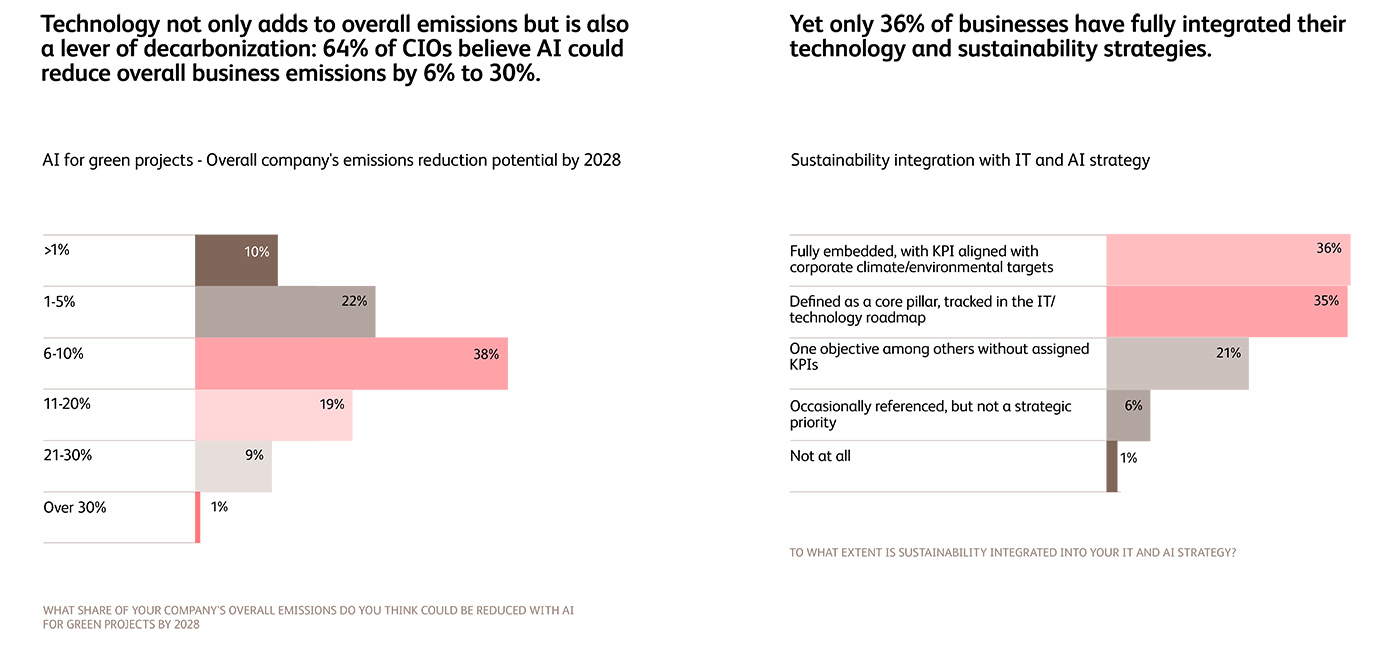
The largest 38% portion said they expected AI for green projects could reduce their emissions by 6-10% by 2028. Meanwhile, a fifth of respondents speculated that reduction would be more than 20%.
But again, it remains unclear how much these leaders really know about the emissions that AI will contribute in that time. A 21% portion of those polled said that while technology was part of their sustainability strategy, it was “one objective among others” and had no “assigned KPIs”. A further 6% said it was occasionally referenced but was not a strategic priority, and 1% did not track it at all. More optimistically, however, beyond the 36% who said it was fully embedded into targets, 35% did at least say it was a “core pillar” being tracked in the firm’s “technology roadmap.”
Rémy Sergent, global leader people and strategy at BearingPoint, commented, “AI can become one of the most powerful enablers of sustainability, but only if it is deployed responsibly. Organisations need a holistic approach that integrates sustainable technology architecture, transparent measurement of digital emissions, and stronger collaboration between CIOs and CTOs, sustainability leaders, and business executives. CIOs and CTOs are increasingly expected to move beyond green IT and lead sustainable technology transformation. By combining technology expertise with sustainability governance, they can help organisations reduce emissions and unlock new opportunities for environmentally responsible innovation.”