ROI concerns must be connected to scalability for AI success

AI is already creating measurable value, however financial gains are often yet to materialise – as revenue or service-delivery impact is currently concentrated below 10%. This means that fears over returns on investment are still a leading barrier to AI adoption, even as nine-in-ten firms insist they would go on investing in the technology regardless of results.
So often in the early stages of digital transformation, confidence exceeds capability. Business leaders are regularly found to overestimate the results their policies yield, and underestimate the importance of the skills their workforce bring to the table. The AI goldrush since 2022 has been no exception to this.
Since the technology went mainstream, multiple studies have shown that business leaders seldom understand how to measure ROI on their AI transformation. Meanwhile, a growing body of research also shows that CEOs have seldom supplied learning opportunities which workers feel would help them AI transformations succeed.
Amid this – and with the mounting suggestion that the potential of AI might only be applicable to certain business models, at particular moments in their development – there is a growing focus on returns on investment regarding the technology. And according to a new study from BearingPoint, while nine-in-ten organisations would continue investing in AI despite, limited expected ROI; the measurable value AI is already generating is largely in cost reduction. With revenue or service-delivery impact currently concentrated below 10%, the business case for hefty investments in the technology may still be waning.
Surveying 1,050 C-suite executives and senior leaders in 13 countries across Europe, the US and China, the study found that this minor impact was also demonstrated across a minority of organisations. While three-quarters of organisations said they had seen measurable top or bottom-line impacts, the number to see both at once (revenue growth and cost reduction) was just four-in-ten.
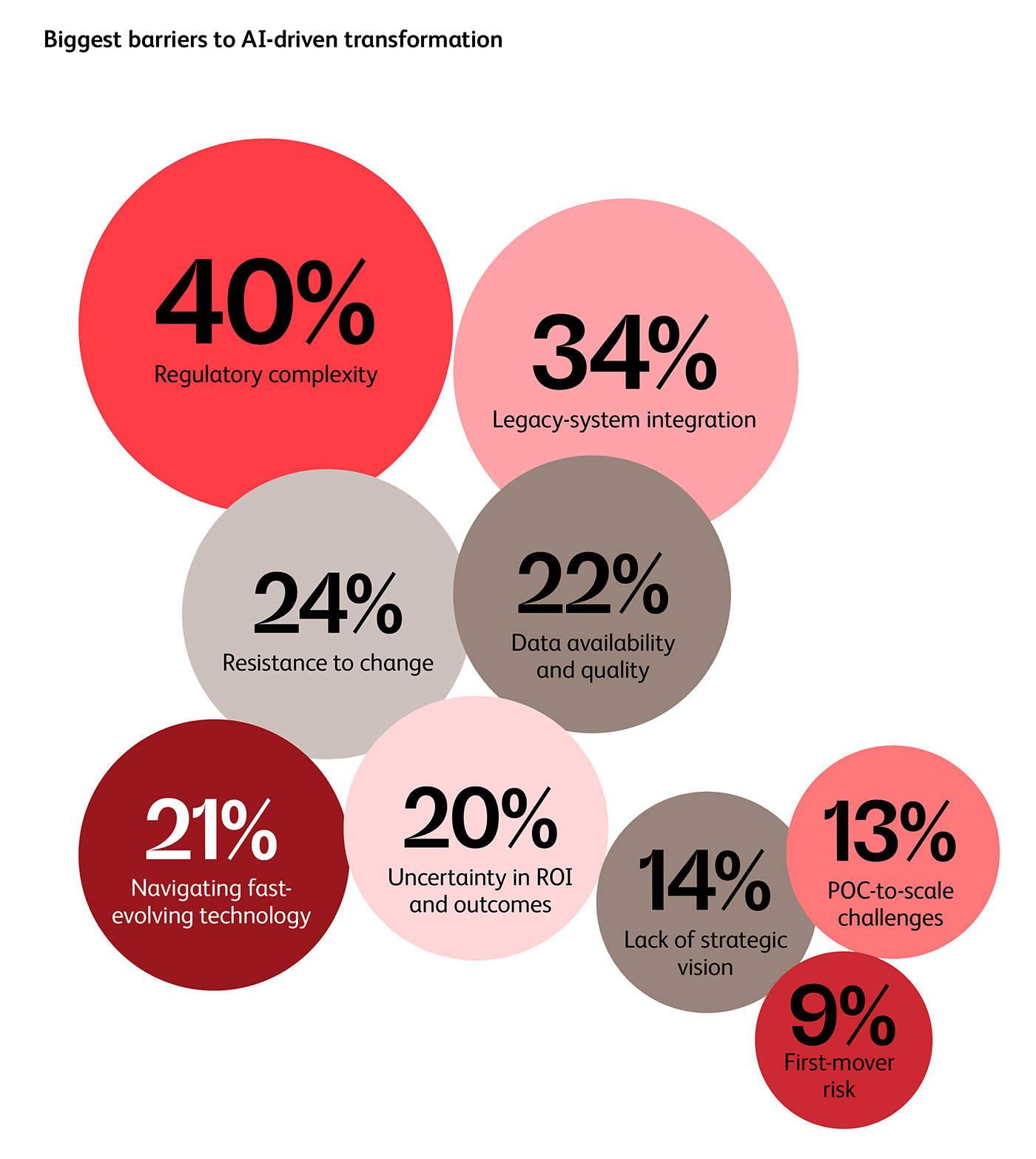
When asked what barriers stood between them and AI-driven transformation, ROI was therefore high on the agenda. While regulatory complexity was the outright leader – concerning 40% of respondents as privacy and security scandals continue to plague the technology – some 20% of leaders also cited uncertainty around ROI and outcomes as holding them back.
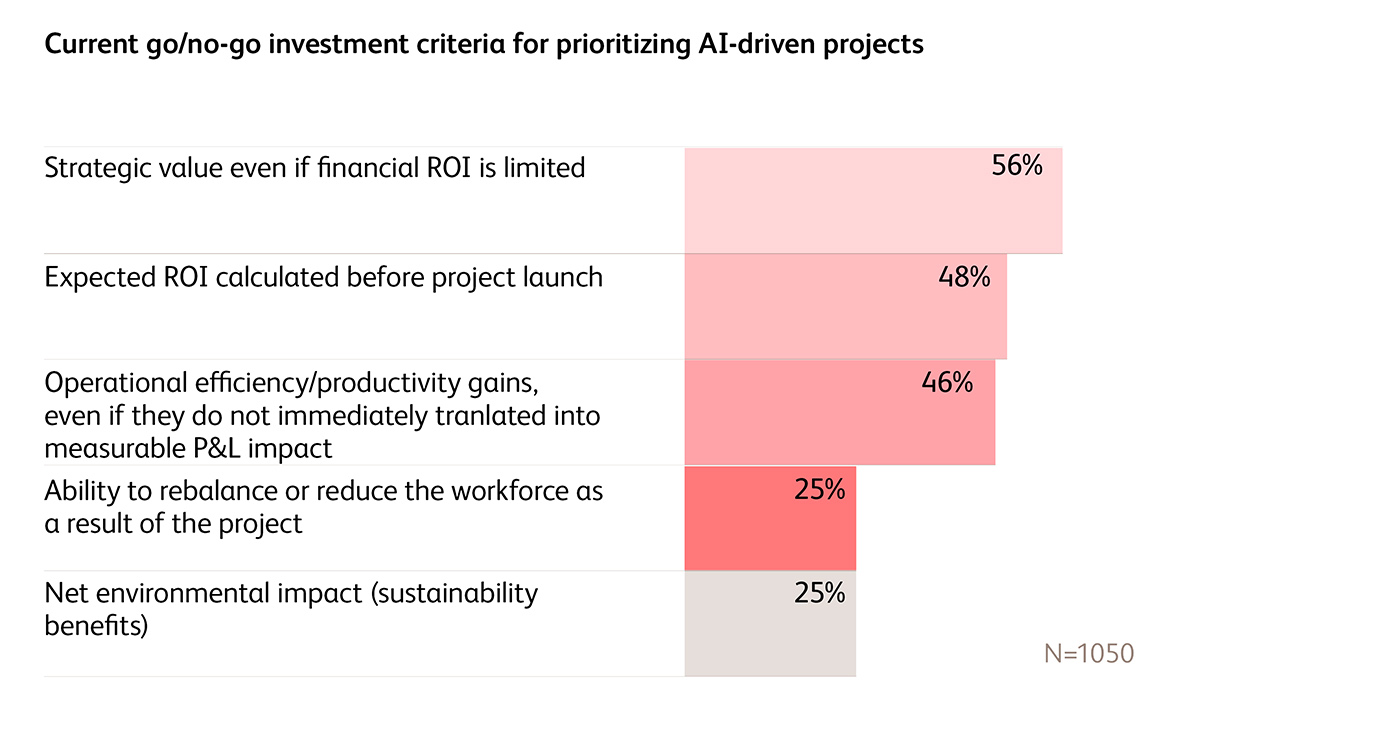
More importantly, when asked what their leading go or no-go criteria were for investing in AI-driven projects, ROI factored again. While 56% said a project would get the go-ahead if it had strategic value – regardless of limited ROI prospects – 48% said they would require expected ROI to be calculated before a project’s launch.
BearingPoint cautioned against painting this as a black-and-white issue, however. Contending that ROI “is only meaningful if the initiative can be successfully scaled”. A frequent cause of AI underperformance is the gap between pilot success and enterprise deployment. Many organisations have demonstrated value in limited environments, only to discover that scaling is constrained by regulatory requirements. So, investment decisions should “systematically assess scalability factors including data maturity and availability, technology readiness, regulatory compliance across markets, adoption potential among users, change management requirements, and operational integration complexity”.
Frédéric Gigant, global leader in customer and growth at BearingPoint, said, “Organisations have shown that AI can create real business value, but proving value and scaling value are two very different things. We found that the organisations pulling ahead are not simply investing more. They are connecting AI to financial accountability, trusted data, governance, architecture, and workforce decisions from the start. Management discipline is what turns isolated success into organisational impact.”