Poor resourcing decisions eroding margins at half of professional services firms

A lack of staff capacity and poor resourcing decisions are regularly reducing margins and revenue at more than half of professional services firms. According to a new study from Dayshape, this means AI integration efforts are continuing to underwhelm across the sector.
Recent years have seen professional services firms struggle with a sustained period of slow growth. But while the industry’s largest players continue to shed staff in a bid to boost their profits, they may be undermining their ability to make AI tools pay for them in the long-term.
According to a new paper from Dayshape, firms in professional services don’t lack demand. What they lack is the ability to turn it into profitable delivery – something which the AI they’re investing in isn’t yet joined up enough to fix.
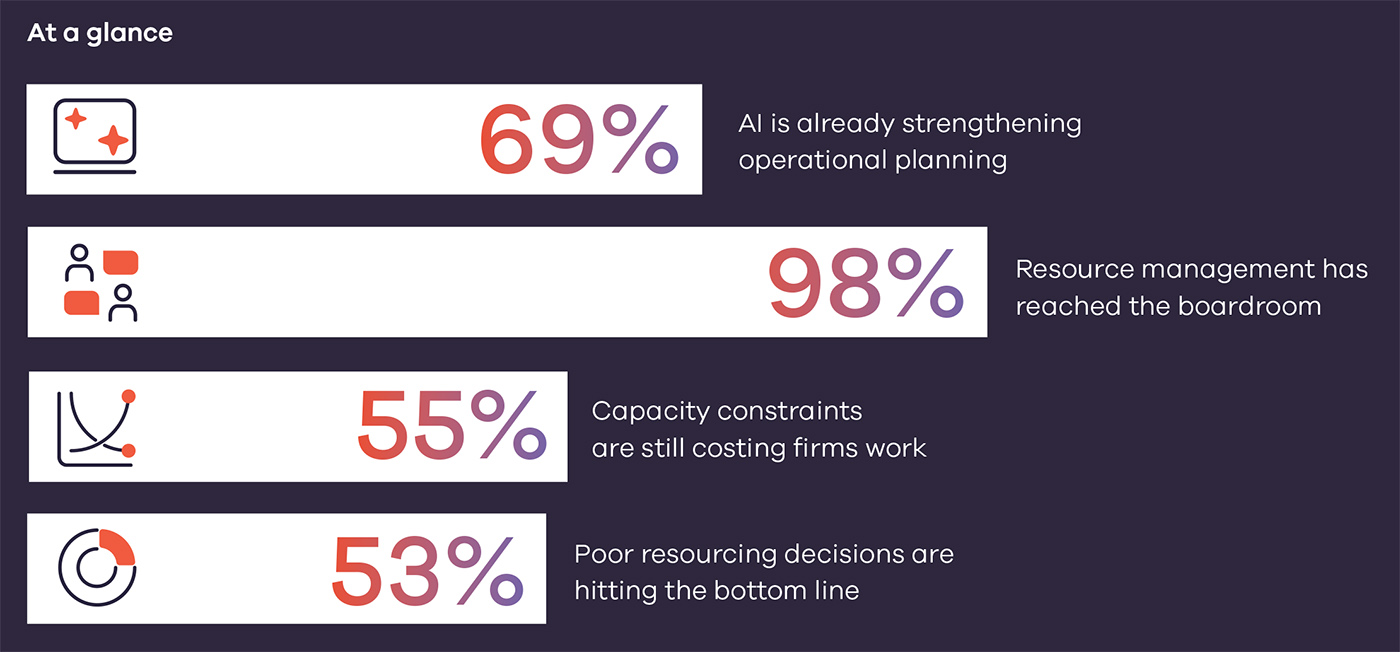
Polling 400 senior leaders at professional services firms in the UK and US, the researchers found that 53% are seeing project margins affected by staff availability and skills matching. Capacity constraints are also making it harder for firms to deliver growth, with 55% missing, delaying or turning down client work as a result.
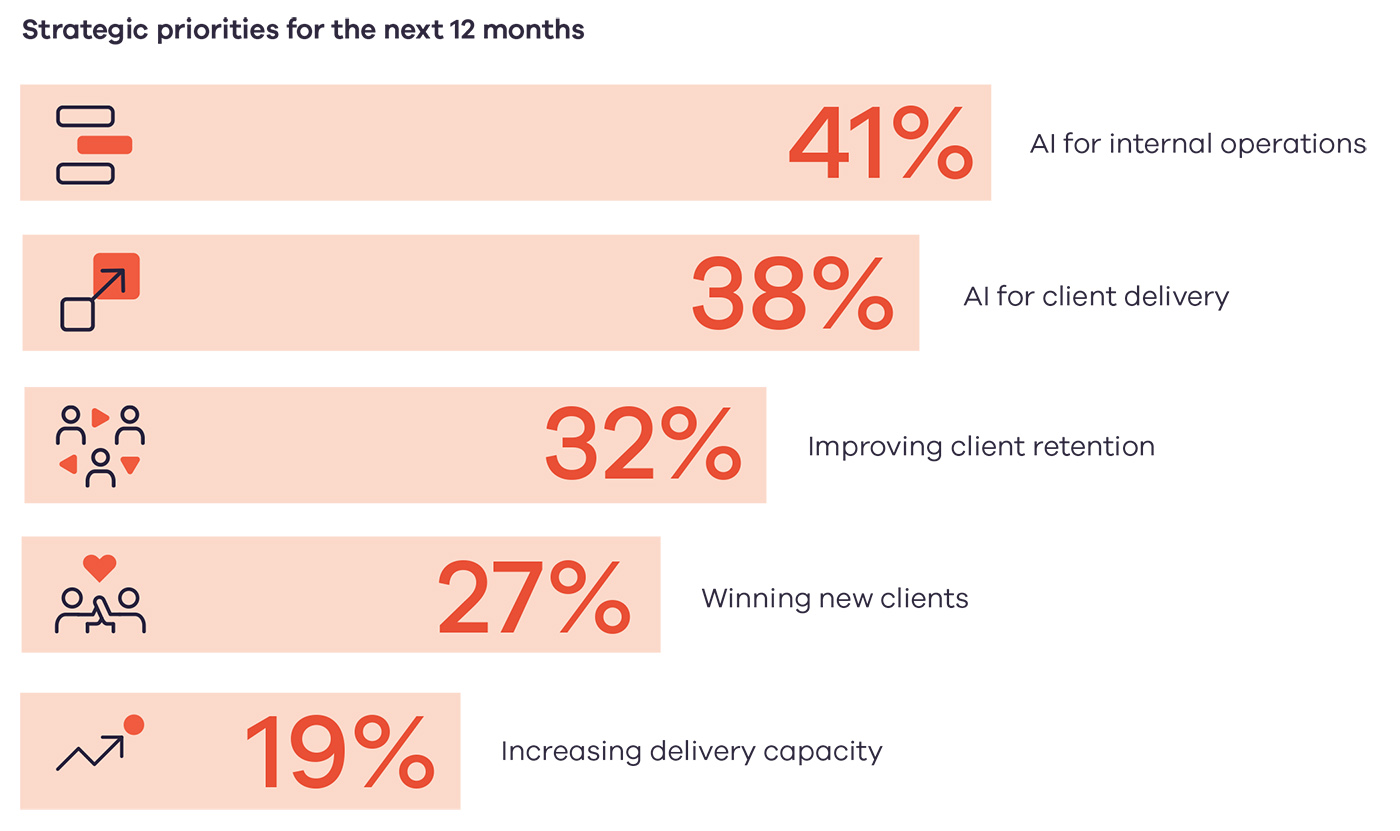
The findings come as firms look to AI to create capacity and support growth, without relying solely on increasing headcount. AI for internal operations is now a strategic priority for 41% of firms, while 38% are prioritising its use in client delivery.
This investment is already producing some results, respondents say. Among organisations using AI in resource operations, 69% say it has improved planning and forecasting accuracy, while 66% report greater efficiency and reduced manual effort.
However, just 14% have embedded AI across all resource operations. Dayshape says this exposes a gap between firms’ investment and ambition around AI and the operational reality of delivering profitable growth.
The research indicates that the next phase of AI adoption will be less about introducing more tools and more about embedding intelligence into everyday operational decisions. As professional services delivery becomes increasingly complex, firms will need to coordinate people, technology and different sources of capacity more precisely if they are to grow without putting margins at risk.
Matt Cockett, CEO of Dayshape, concluded, “Firms do not have a shortage of growth ambition. The challenge is turning demand into profitable delivery. The real value comes when AI is embedded into the decisions that determine what work a firm can accept, who should deliver it and whether it will be profitable. Successful firms will be those who can coordinate every source of capacity more intelligently and act before problems affect clients or margins.”