Third of UK workers consider second jobs as financial difficulties bite

New research from LCP suggests financial pressure is becoming a workforce engagement, productivity and retention issue for employers. With more than half of employees saying that financial concerns have affected their work, staff are becoming less engaged with their primary employer – and a third are considering a second job.
Employers around the UK are recognising that supporting the long-term wellbeing of their teams – both professionally and personally – can have a direct impact on engagement, motivation, and overall performance. When employees feel healthy, supported, and valued, they demonstrate higher levels of engagement, focus, and commitment. This translates into greater productivity, improved collaboration, and more effective decision-making across teams, which in turn strengthens the organisation as a whole.
However, financial stress has increasingly become an issue where employees feel under supported. According to a new study from LCP, that is starting to have a major impact on productivity, too.
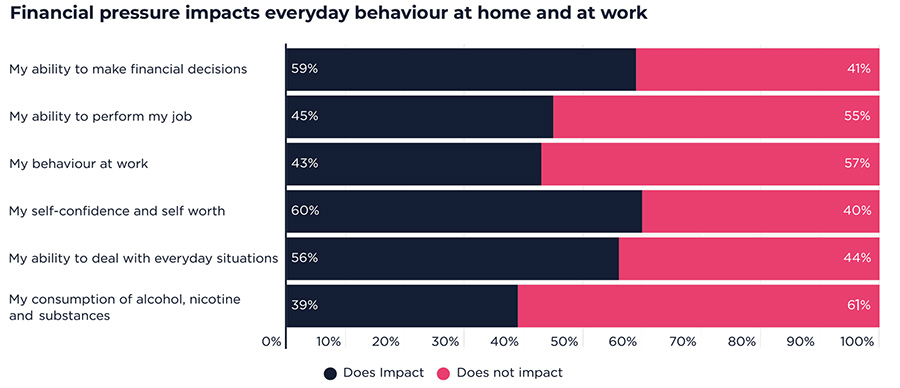
LCP’s financial wellbeing survey of 10,000 UK workers showed how financial matters are becoming a workforce resilience issue. Now, a majority of 57% of workers say financial concerns have affected their work. These findings raise important questions about how employers can better support, engage and retain their people.
When asked what areas of their life financial pressure was impacting, 59% said it was impacting their ability to make other financial decisions. Meanwhile, 45% said they could not perform their job properly, and 43% said it had a knock-on affect on their behaviour at work – something which could cause teams as a whole to become less productive. Worryingly, some 39% also said it was also leading to increased consumption of alcohol, nicotine, and “substances”.
Heidi Allan, head of financial wellbeing at LCP, said, “Employers cannot remove every financial pressure facing their people, but they can listen to what employees need and review whether their reward, benefits and financial wellbeing support are providing meaningful help. This starts with understanding where financial pressure is most acute. Employers should use workforce data to identify where support may be needed, while also making time to listen directly to employees and understand their lived experiences.”
Among those frontline issues, half of employees have borrowed in the past 12 months, and while this is down from 63% in 2024, a wider fragility still remains. Some 30% have less than one month’s savings, including those with no savings at all, while 35% describe their financial position as ‘coping’ and 16% as ‘in crisis’ or ‘vulnerable’. Together, the findings suggest that many employees have limited capacity to absorb unexpected costs, helping to explain why a significant proportion are considering additional work.
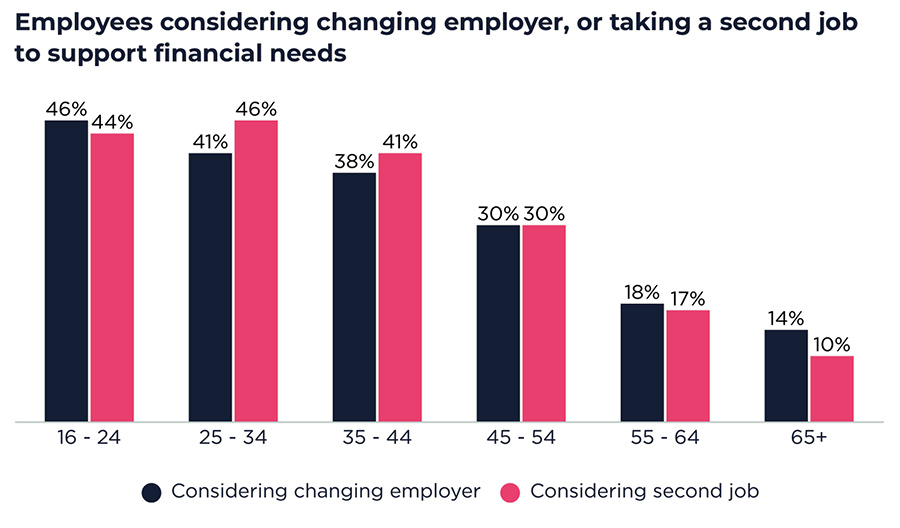
At the same time, 34% of employees are now considering taking a second job to support their finances. The findings show that those considering second jobs span different age groups, household circumstances, and income levels. And with 41% already feeling less engaged or motivated because of financial stress, the additional drain on energy is unlikely to improve the situation.
Allan added, “The number of employees considering second jobs should be on every employer’s radar. This is not limited to one age group, income bracket or household type, but reflects financial pressures being felt across the workforce.”