Price still the leading metric for customer loyalty

Consumer sentiment can change more rapidly than ever – with questions around a brand’s production methods, supply chain ethics, and even their stances on social or political issues leading to possible changes in customer loyalty. According to a new study from Merkle, however, when it comes to what consumers really want when engaging with products and services, price is still king.
As customer expectations evolve faster than ever, business leaders have been encouraged to adopt a raft of measures to stay ahead of the curve. Often, it has been said that the key to keeping ahead is not just about keeping up with trends, but in anticipating them. To do that, businesses potentially need to embed customer insight into all their decision-making, leveraging real-time data and feedback loops to stay in sync with shifting needs.
Surveying 2,000 consumers, the data from Merkle suggests that while culture, mindset, and values of a business do still play a part in customer loyalty, however, many of the driving forces are still the traditional levers retailers have operated for decades.
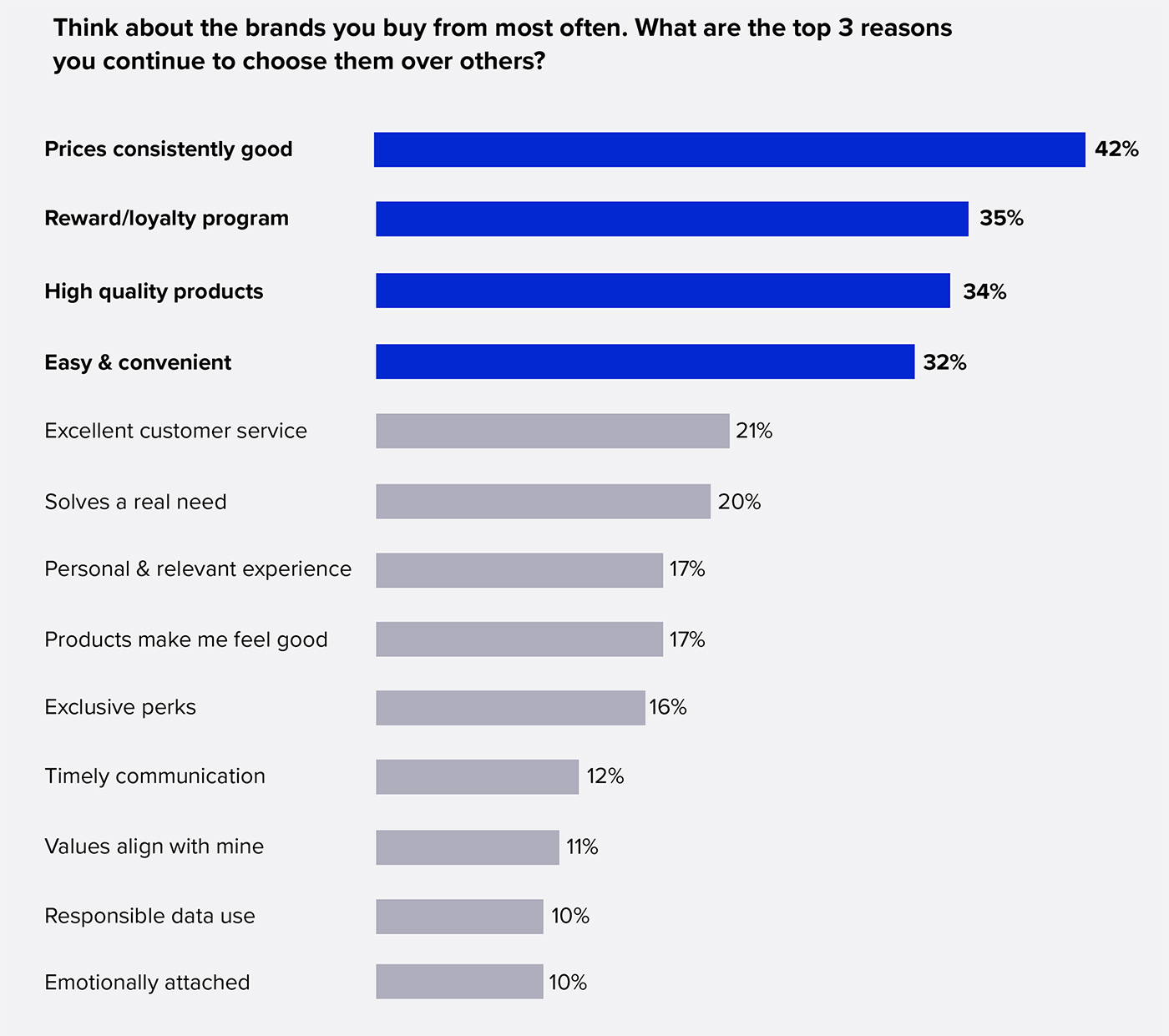
At present, 42% of all consumers say that prices being “consistently good” is one of their top three reasons to stick with a brand. Connected to this, 35% say that a reward or loyalty scheme will convince them to remain with a particular business – as consumers feel the pinch amid heightened inflation, an uncertain employment market, and a sustained cost of living crisis.
There are generational divides to account for, according to Merkle. Despite having less disposable income, Gen Z is more likely than any other cohort to choose a brand when its values align with their own, or when they feel an emotional connection to it. In contrast, Baby Boomers “over-index” for the top four functional drivers, which also include the quality of a product, and its convenience.
In the long-term, businesses may well need to recalibrate how they maintain consumer loyalty, then. In the present picture, however, price remains king – something reinforced by the top factors associated with a negative experience.
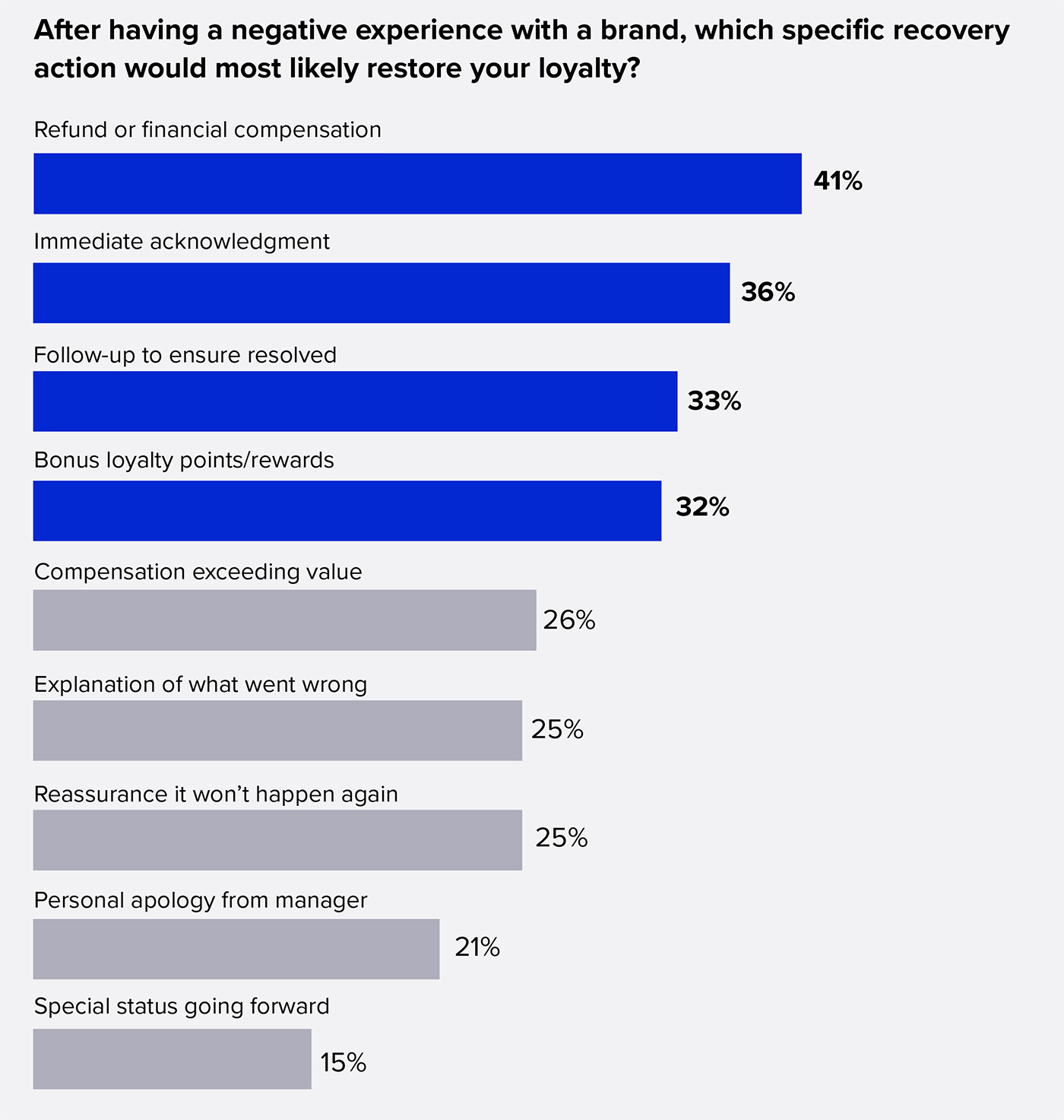
A 45% portion of those surveyed said they would remain loyal to a brand, if it made them “feel valued” after a bad experience. As to how a brand might make them feel valued, the largest number went for the monetary route – with 41% saying a refund or “financial compensation” would restore their loyalty.
Also in the top four, 36% simply required “immediate acknowledgement” of an issue, while 33% expected a follow-up to ensure a matter was resolved. But again, 32% of respondents said they would expect bonus loyalty points, or other rewards, to ensure their continued custom – making sure the next time they shop with the brand will be less expensive.
Loyalty programmes themselves are no easy thing, however. The idea of being a ‘member’ rather than a customer comes with a fresh set of expectations – with 45% saying they appreciate birthday or anniversary rewards. Meanwhile, 50% would expect exclusive offers before anyone else, and 41% would hope for early access to new products – suggesting that there is more to these schemes than simply cost-saving.